
What Is A Gentle Cesarean?
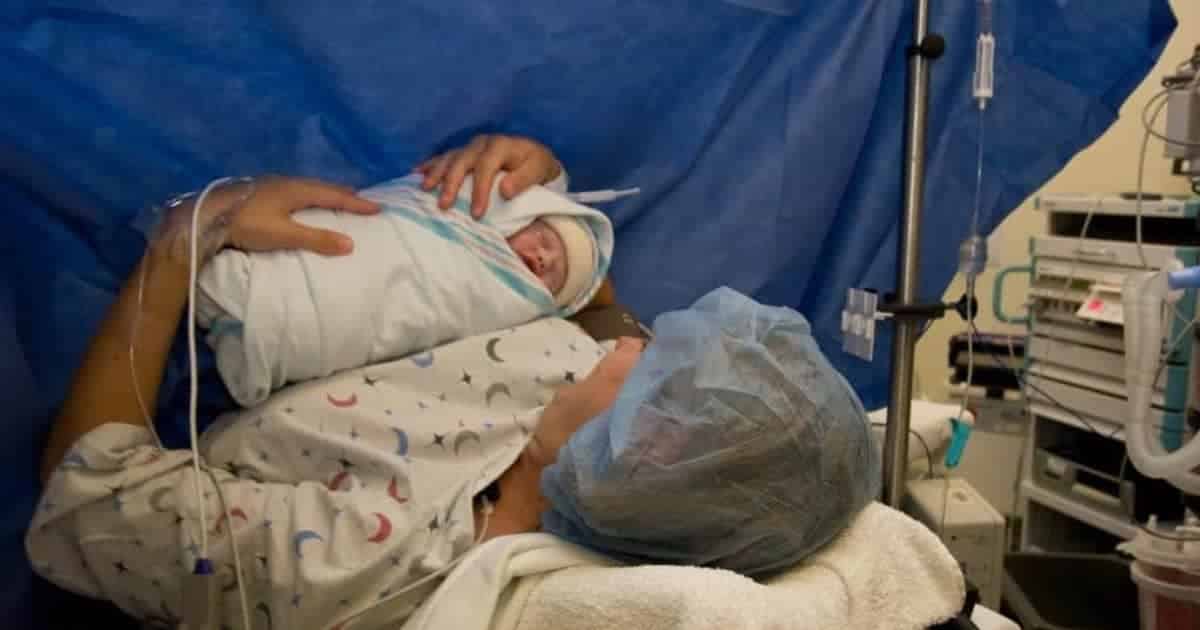
Many families are interested in what is referred to as a ‘gentle cesarean’ or a ‘family centered cesarean.’ The purpose is to allow mothers and partners a more active role at the birth, create a peaceful and calm atmosphere and to emulate what happens during and after a vaginal birth.
Let’s discuss the features that may be included as part of a gentle cesarean:
1. Continual presence of a support person (partner, doula or even both) in the operating room.
You may feel scared and alone lying on the operating table while the surgery takes place. Therefore, having a support person by your side reassuring you, watching the baby be born and keeping you informed of what is happening can make it a better experience for you. Your partner can also accompany the baby to any postnatal tests.
2. Music of your choice to set a calm and positive mood.
Some care providers will accommodate your choice of music. This may help you to relax and enjoy the experience.
3. Clear or lowered drapes.
Cesareans are carried out behind a drape with you lying flat on the operating table. By having a clear drape or lowering the drape you can still see the baby being born. You can request that the baby be slowly lifted with the incision still hidden from view.
4. Delayed cord-clamping, if there is no medical reason for immediate cord clamping.
The baby can benefit from waiting a few more seconds to allow the cord to stop pulsing thereby increasing his or her blood volume and health outcomes. For further information check out this article from ACOG and the research presented by Dr. Fogelson in this lecture.
5. Unstrapped arms.
In a typical cesarean your arms will be strapped down. Having one or both arms unstrapped is less restrictive and allows you the chance to hold the baby.
6. Skin-to-skin time with baby.
Your baby can be put in your arms immediately after the birth. If needed a support person can also help you support the baby. Skin to skin promotes successful breastfeeding and proper hormone adjustments. It also regulates the baby’s temperature and breathing, and keeps you and your baby more content.
7. Breastfeeding in the operating room.
If baby is on your chest, skin to skin, this makes it easier for you to breastfeed when you and baby are ready to do so. Additionally, skin to skin and self-attachment to the breast by the baby within the first hour after birth helps to establish a good milk supply.
8. Limited Separation.
When possible having newborn tests and procedures done with the baby on your chest limits the amount of time you are separated from your baby.
9. A vaginal swab to promote a healthy microbiome.
Research suggests that babies born via cesarean are at higher risk for serious health concerns. This may be attributed to the fact that babies born via cesarean are missing the transfer of healthy bacteria they would otherwise be subject to in the birth canal. These healthy bacteria are considered to be a major contributing factor to the baby’s budding immune system and long-term health. At your request care providers can use a sterile vaginal swab to expose the baby to your healthy bacteria and thereby replace this missing step. To find out more about this check out Microbirth, a documentary that thoroughly explores this topic.
Although having a c-section may not have been your preference, the above options add up to more deliberate involvement for you and your partner, as well as the prevention of risk factors for the baby. If there is no medical reason to rush the process, implementing these features may give you a more satisfying birth experience.
Talk to your care provider about this in advance. You can also interview to locate a provider that will support your wishes. Many providers will do their best to accommodate. The USF Department of OBGYN practicing at Tampa General Hospital is one local group that supports families in having a gentle cesarean when possible.
Also be sure to check out our Guide to VBAC & Cesarean Birth Support in Tampa Bay and Do I Need A Doula for a C-Section or an Epidural?

Christie Rinder is the founder of Buddha Belly Doulas, Tampa Bay's original and largest doula agency. Supporting families since 2009, she's passionate about ensuring every family has the support they need during pregnancy, birth, and postpartum. She believes in helping women recognize their own inner wisdom, strength and power.
Having served as President of the Tampa Bay Birth Network for six years and 17 years serving families as a doula and agency owner, she has a reputation for leadership, dedication and compassion. A childbirth educator, certified lactation counselor as well as a certified doula, she makes a point of ensuring mothers and their partners understand all their birthing options and what to expect on their journey. > learn more about Christie



Enjoy our popular guides to all things pregnancy, birth, postpartum and baby.

Tampa Pregnancy Guide
Your pregnancy journey is uniquely yours. From first trimester essentials to birth prep and postpartum planning, we’ll walk you through...

Your Guide to Hiring a Doula
Hiring a doula can be a game-changer, but knowing where to start isn’t always easy. This guide walks you through...
Labor & Birth Preparation Guide
Birth looks different for every family, and thoughtful preparation makes all the difference. Learn the basics of creating a birth...

Postpartum Recovery Guide
The weeks after birth are transformative and often the least talked about. Learn about: the physical and emotional sides of...