
Can My Baby Handle a Trip? Your Helpful Guide to Newborn Travel
Are you planning a trip soon?
Planning on taking your sweet, precious baby along?
There are a few things to keep in mind when it comes to traveling with your baby.
First off…
We understand that traveling with a newborn can be daunting.
Not only are you getting used to your at-home routine, but you’re also still recovering from birth. This can make it difficult to decide if you’re going to travel or not.
But listen in…
Don’t feel like you have to travel.
Travel if you need to or want to.
Your mindset going into this will matter a lot. Traveling with a baby is more intimidating when you overthink it. If traveling is unavoidable or you really want to, don’t let it stress you out (too much).
There are many ways to be proactive as you prepare for newborn travel. It may be easier than you expect.
Preparation: Newborn Travel Checklist
Just like with any trip, with or without a baby, it helps to have a checklist.
It allows you to establish priorities and get a sense of what you can take and what you can leave at home.
Here’s a checklist of items to keep in mind as you prepare for your trip:
Large Baby Gear:
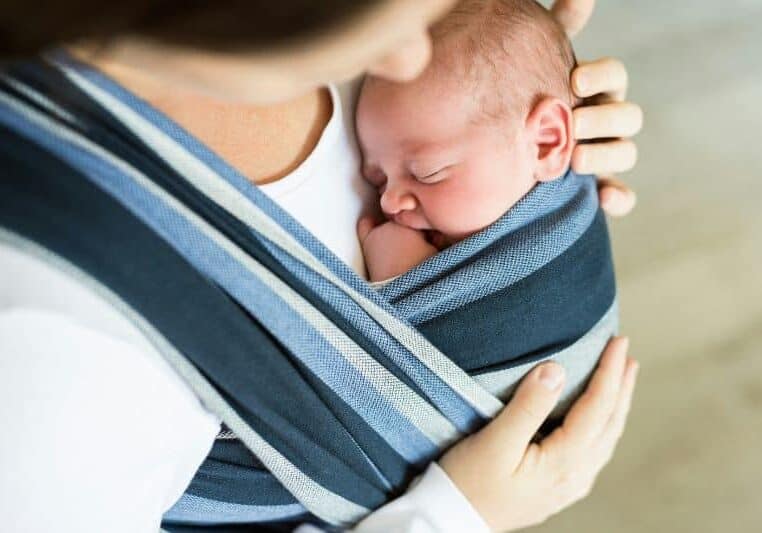
- Baby carrier/wrap
- Car seat
- Stroller
- Travel crib/bassinet
Baby Clothing:
- Shirts/onesies
- Pants
- Rompers
- Sleepers
- Socks
- Hat (warm and fuzzy for winter, sun hat for warmer months)
- Swimsuit (if needed)
Extra tip: Consider booking a place to stay that has access to a washer and dryer. This way, you don’t have to overpack outfits and can wash clothing as needed.
Nursing and Feeding:
- Travel bottles
- Travel-size dish soap (especially helpful for hotel rooms)
- Bottle wipes
- Travel drying rack
- Breast pump + accessories
- Nursing cover
- Large insulated mug (great for warming a bottle)
- Burp cloths
- Wipeable bib
- Travel high chair
- Snack trappers
Bath and Hygiene:
- Diapers (you can bring 8 to 10 diapers with you, and then buy more when you arrive at your destination)
- Wipes
- Travel changing pad
- Baby first aid kit
- Infant Tylenol
- Travel size trash bags (you can use travel diaper bags or small doggie bags)
- Sanitizing wipes
- Inflatable tub
Play and Sleep:
- Travel play mat/blanket
- Pacifier
- Crib sheets
- Swaddle blankets/sleepsack
- White noise machine (so effective for sleeping in an unfamiliar place)
Remember, not every single item will apply to you. Only you know what is necessary. You may end up taking more or less than what is on this list.
Modes of Transportation – Car or Plane?
Whether you’re traveling by car or plane…
You probably have many questions. Let’s answer them.
There are a few things to keep in mind when it comes to traveling with a baby.
Traveling By Plane With a Newborn
Is it safe for me to fly with a newborn?
Short answer: Yes.
Long answer: There are a few things to keep in mind. You know the health of your baby best. So, use that knowledge to make this decision.
Many healthcare professionals urge parents not to fly with their babies until they are 7 days old. Before you book anything, check in with your pediatrician, especially if your baby is still a newborn. Airports and planes are crowded, germy places, and your baby’s doctor can tell you whether their immune system is ready for that kind of exposure.
Some will tell you to wait even a few months after their birth.
Here’s their reasoning:
A baby’s immune system is brand new.
Unfortunately, airplanes tend to be germ magnets. Oftentimes, adult immune systems can handle it without getting sick, but with babies, you need to be more careful.
Also, depending on your baby’s health, they may not react to pressure changes very well. For example, if your baby was born with heart or lung problems, it may be wise to hold off on flying. Their bodies likely need more time to develop and strengthen before flying in a plane.
So, yes, newborn babies can fly with you. However, you must keep your baby’s health in mind to make this decision.
Can I hold my baby in my lap while flying?
Many experts recommend not to do this.
Here’s why:
Technically, according to the Federal Aviation Administration (FAA)…
Children under 2 can fly for free, which means they are sitting on your lap.
But here’s the thing…
If something goes wrong on the plane, or even a bit of turbulence happens, you don’t have a great way to protect your baby.
In fact, unexpected turbulence can cause serious injuries to children who aren’t properly restrained during a flight.
Here is the safest way for your baby to fly:
For infants under 20 pounds, it is safest for them to ride in a rear-facing car seat during the entire flight. This would involve you most likely purchasing another seat right next to you. Or, you can try to plan your trip during low-volume travel times. Then, hopefully you can score an empty seat right next to you. Not all car seats are approved for use on a plane, so it’s worth double-checking before you fly. You can see if your car seat is FAA travel approved here.
You can also use an FAA-approved CARES airplane harness device, which works with the airplane seat belt. It is designed for children who can sit upright on their own, are up to 40 inches tall, and weigh between 22 and 44 pounds, making it an option for toddlers and young children.
Can my baby lay flat at all during the flight?
Yes, there are options for you to do this. This can be especially helpful during long flights.
- Inflatable seat extender: Many airlines will let you bring an inflatable seat extender. This allows your baby to lay flat next to you.
- Airplane bassinets: Some airlines (mainly for long international flights), offer bassinets. They latch to certain areas of the airplane. Depending on the airline, the weight limit may vary. Also, these are available mainly for convenience, not safety. So, your child usually cannot be in them during take-off, landing, or turbulence.
- Sleeper seats / Skycouch: For long-haul flights, some airlines offer seating options that give families extra room to stretch out. Air New Zealand’s Skycouch, for example, converts a row of economy seats into a flat, couch-like space where you and your baby can have more room to rest.
While your baby is lying flat, keep their safety in mind. Check on them periodically to make sure they have enough space to breathe.
How to make your air travel experience with a baby easier
Wear your baby through the airport. If your baby is still small enough for a carrier, wearing them frees up your hands for your ID, your ticket, your luggage, and that coffee you need. It’s one of the easiest ways to make the airport part of your trip less chaotic.
Look for direct flights first. Not having to change planes makes traveling with your baby so much easier. If a direct flight isn’t an option, look for a longer layover instead of a tight connection. More time between flights means less stress rushing through a busy airport with a baby in tow.
Traveling By Car With a Newborn
Is it safe for my baby to travel for hours at a time in their car seat?
Yes, this can be quite safe for your baby. Also, driving in the car puts your baby at less risk of getting sick.
But, here are a few things to keep in mind while traveling for hours in the car:
- Check car seat safety. Always make sure to get your baby’s car seat inspected before use.
- Consider sitting in the backseat with your baby if possible. If someone else is able to drive, sitting in the backseat with your baby could prevent a few issues. You are there to comfort them if they cry, entertain them, and feed them. Also, you’re there to monitor if they need a diaper or clothing change.
- Plan for breaks. Babies need to take more breaks than adults do. It’s just a fact! Be proactive now, and allot yourself more time to arrive at your destination.
- Plan your stops around feeding times. Your baby still needs to eat every few hours, so build your stops around that instead of fighting it. If your baby’s already on a feeding schedule, there’s no need to change it just because you’re traveling. Planning around it from the start makes for a smoother, more restful trip for everyone
- Give yourself extra time, especially for longer trips. Beyond the stops for feeding and diaper changes, you may want to add a full day or two to your travel time. Being well rested and unhurried matters, especially if you’re the one driving.
- Pack snacks and water for yourself too, especially if you’re breastfeeding. It’s easy to focus entirely on the baby’s needs and forget your own, but staying fed and hydrated helps you show up for your baby on the road.
- A bottle warmer with a car adapter can be a nice addition to your feeding gear for road trips. Many come with a wall adapter too, so it doubles as something you can use once you’ve reached your destination.
When is the best time to travel with my newborn?
This is up to you.
Remember, you know your baby best. You also know your family best.
Many families take road trips early in the morning because they know their kids will be sleeping. Some decide to drive during their baby’s normal nap time, because they know driving in the car will calm them. Others consider driving at night because it’s easier for them.
It just depends.
So, stay in tune with your baby’s routine, and plan your trip accordingly.
What newborn travel essentials should I have nearby?
Being proactive will help you during a long car ride. Whether you are sitting in the backseat or in the front seat, having important items within arm’s reach will only make your trip easier.
Here’s a list of items to have near you:
- Breast milk or formula in a cooled bag (you can measure out formula ahead of time and keep water separate).
- A thermometer
- Pacifier or other soothing toy
- Burp rags and bibs
- Wipes (these will always come in handy)
- Extra diapers (these also work well to soak up any large spills or accidents)
- Musical books or devices that play sounds and music
Remember, always make room for extra time.
The benefit of traveling in the car is you are on your own schedule. Use that advantage to allow yourself more grace, less stress, and to slow down.
This will make your trip easier.
Traveling with your baby is part of your postpartum journey. We’re happy to help and direct you in anything you may need.
Talk to us today. We’re here for you!
Contact us directly here.
You may also be interested in: Surviving the Holidays with a Newborn.

Christie Rinder is the founder of Buddha Belly Doulas, Tampa Bay's original and largest doula agency. Supporting families since 2009, she's passionate about ensuring every family has the support they need during pregnancy, birth, and postpartum. She believes in helping women recognize their own inner wisdom, strength and power.
Having served as President of the Tampa Bay Birth Network for six years and 17 years serving families as a doula and agency owner, she has a reputation for leadership, dedication and compassion. A childbirth educator, certified lactation counselor as well as a certified doula, she makes a point of ensuring mothers and their partners understand all their birthing options and what to expect on their journey. > learn more about Christie

Enjoy our popular guides to all things pregnancy, birth, postpartum and baby.

Tampa Pregnancy Guide
Your pregnancy journey is uniquely yours. From first trimester essentials to birth prep and postpartum planning, we’ll walk you through...
Your Guide to Hiring a Doula
Hiring a doula can be a game-changer, but knowing where to start isn’t always easy. This guide walks you through...
Labor & Birth Preparation Guide
Birth looks different for every family, and thoughtful preparation makes all the difference. Learn the basics of creating a birth...

Postpartum Recovery Guide
The weeks after birth are transformative and often the least talked about. Learn about: the physical and emotional sides of...